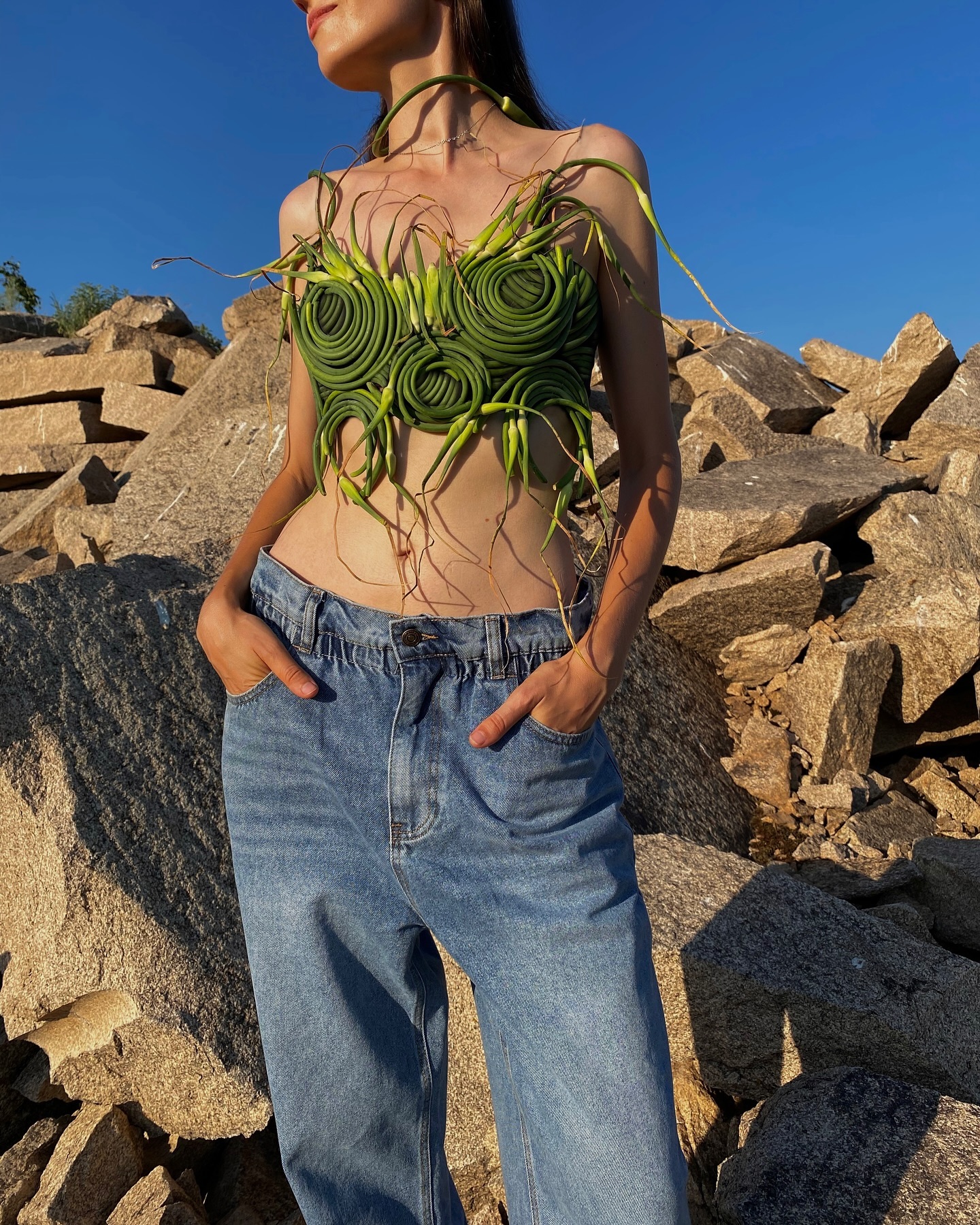
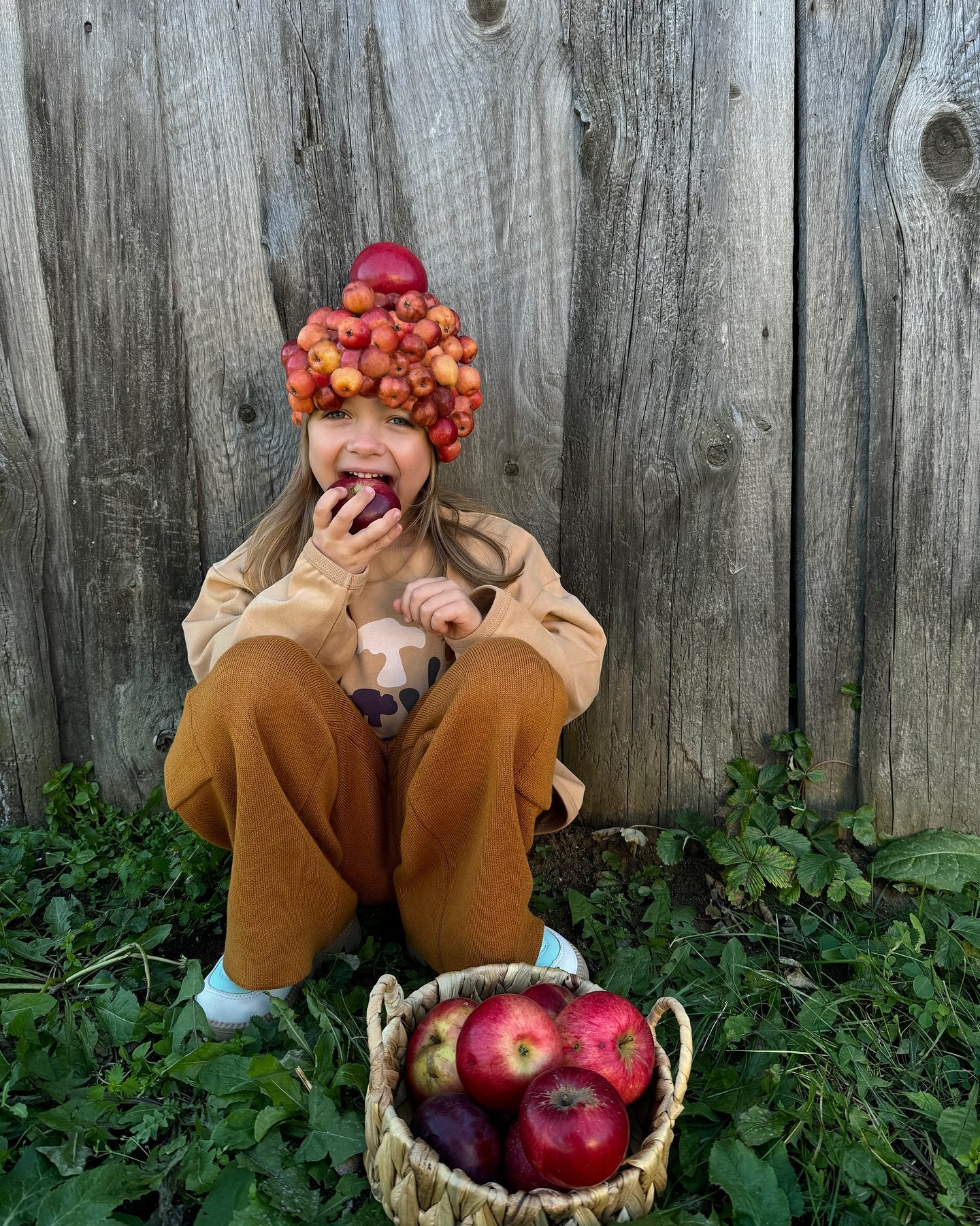
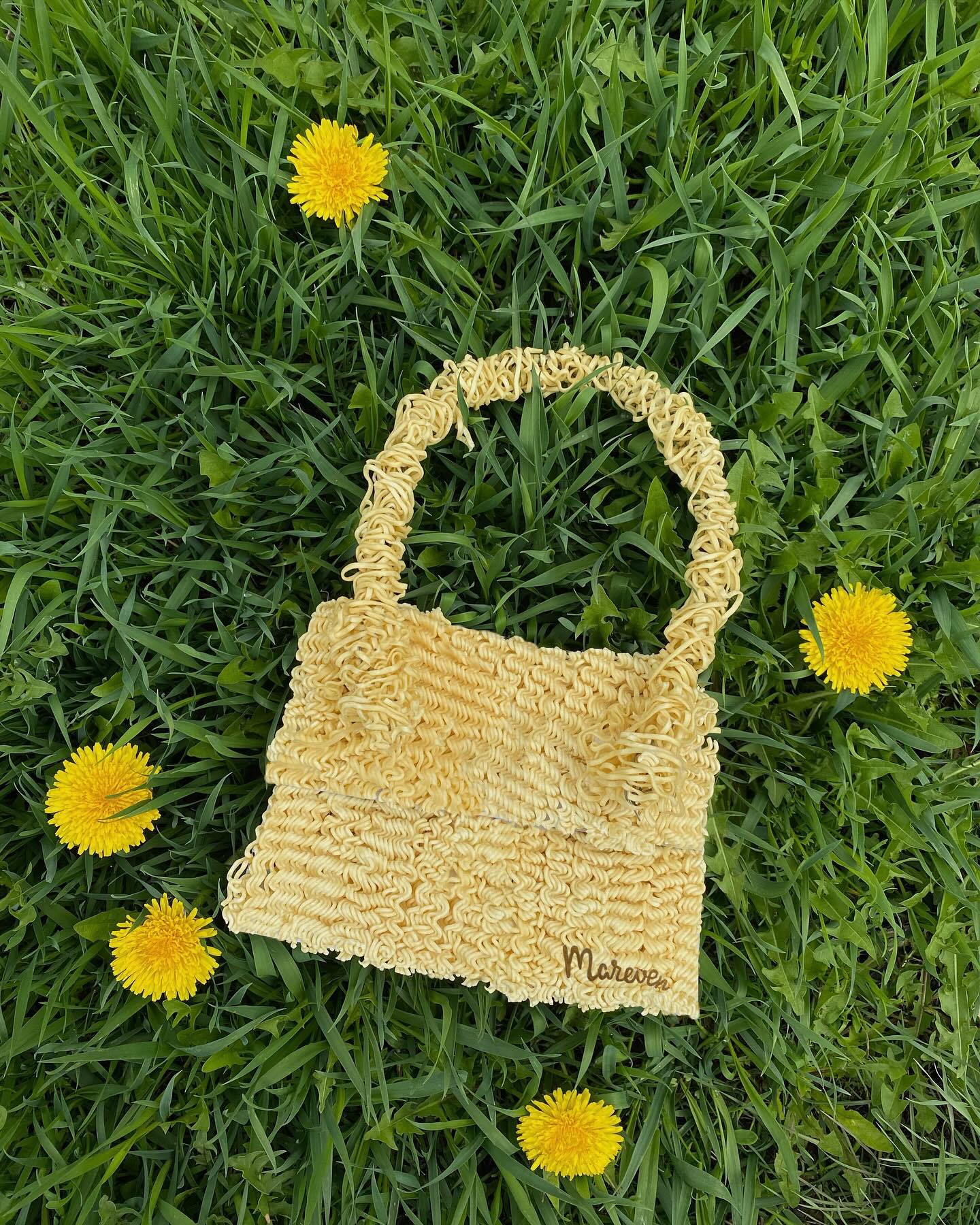
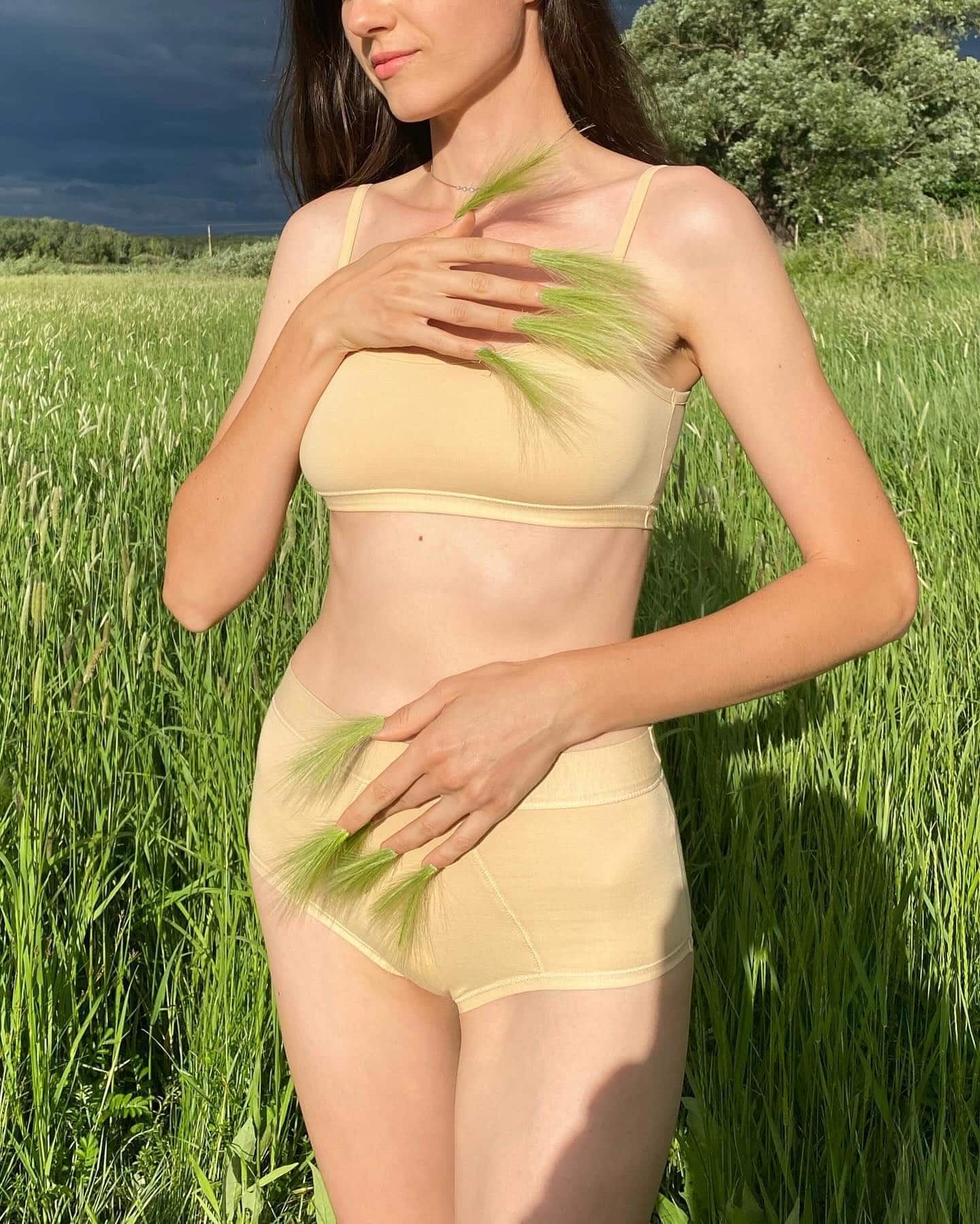
Shukshina’s creative journey begins in the countryside of her youth. As she explains:
“Plants were a part of life … I looked at maple winglets as potential earrings, lichen patterns as a print in clothes.”
With no formal fashion training, she spent years teaching history before embracing her creative calling. Her process is intuitive, when a particular leaf or stalk catches her eye, she molds it into form without waiting for permission from trends or style editors.
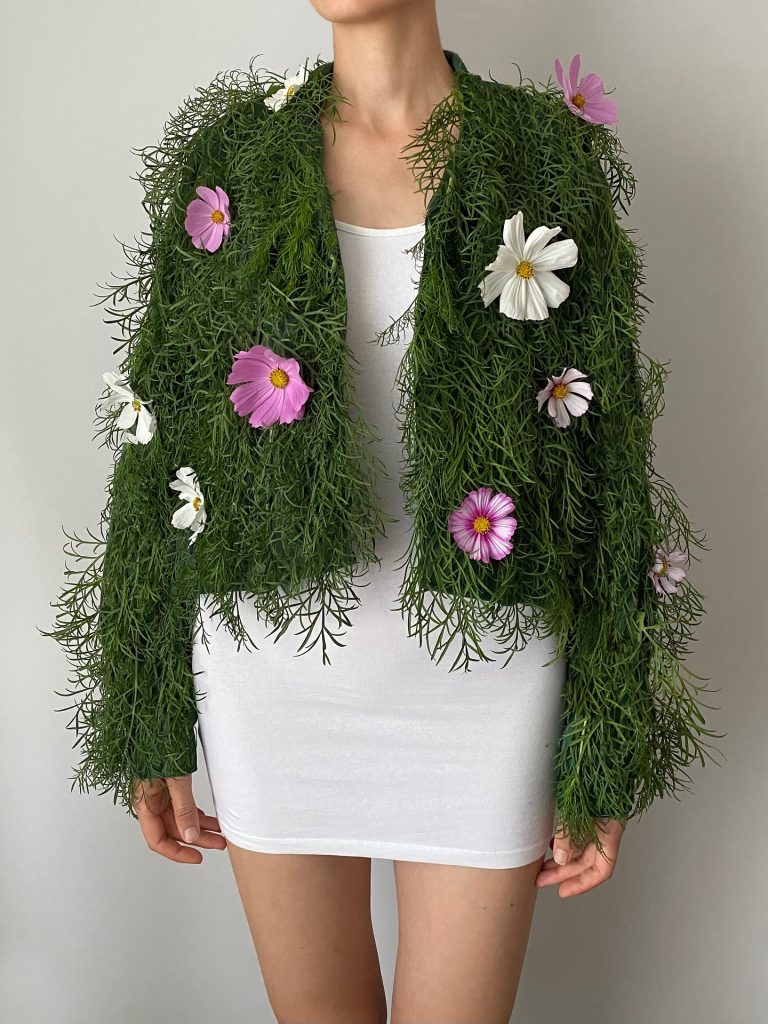
A jacket composed entirely of cabbage leaves, photographed and subsequently fed to chickens.
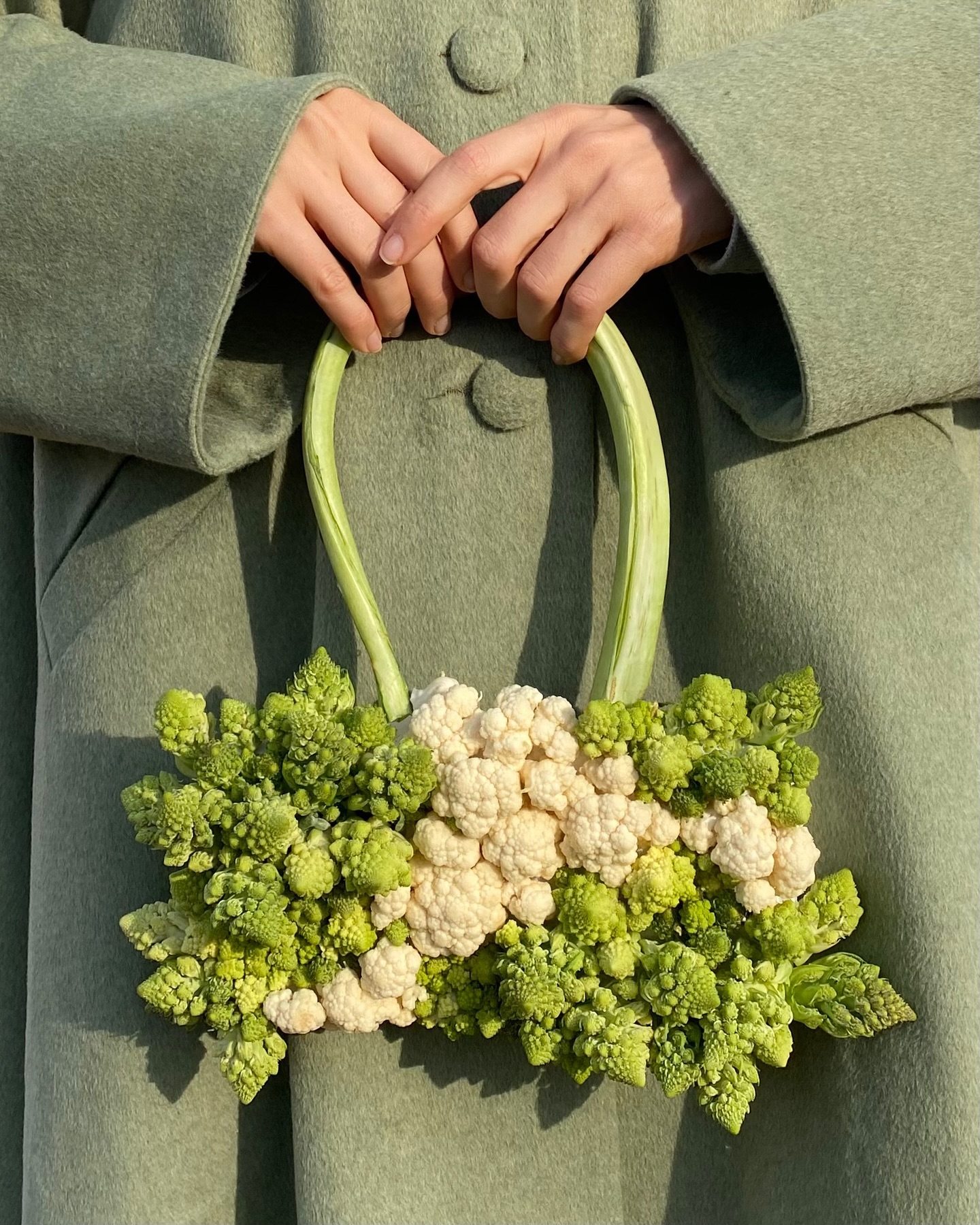
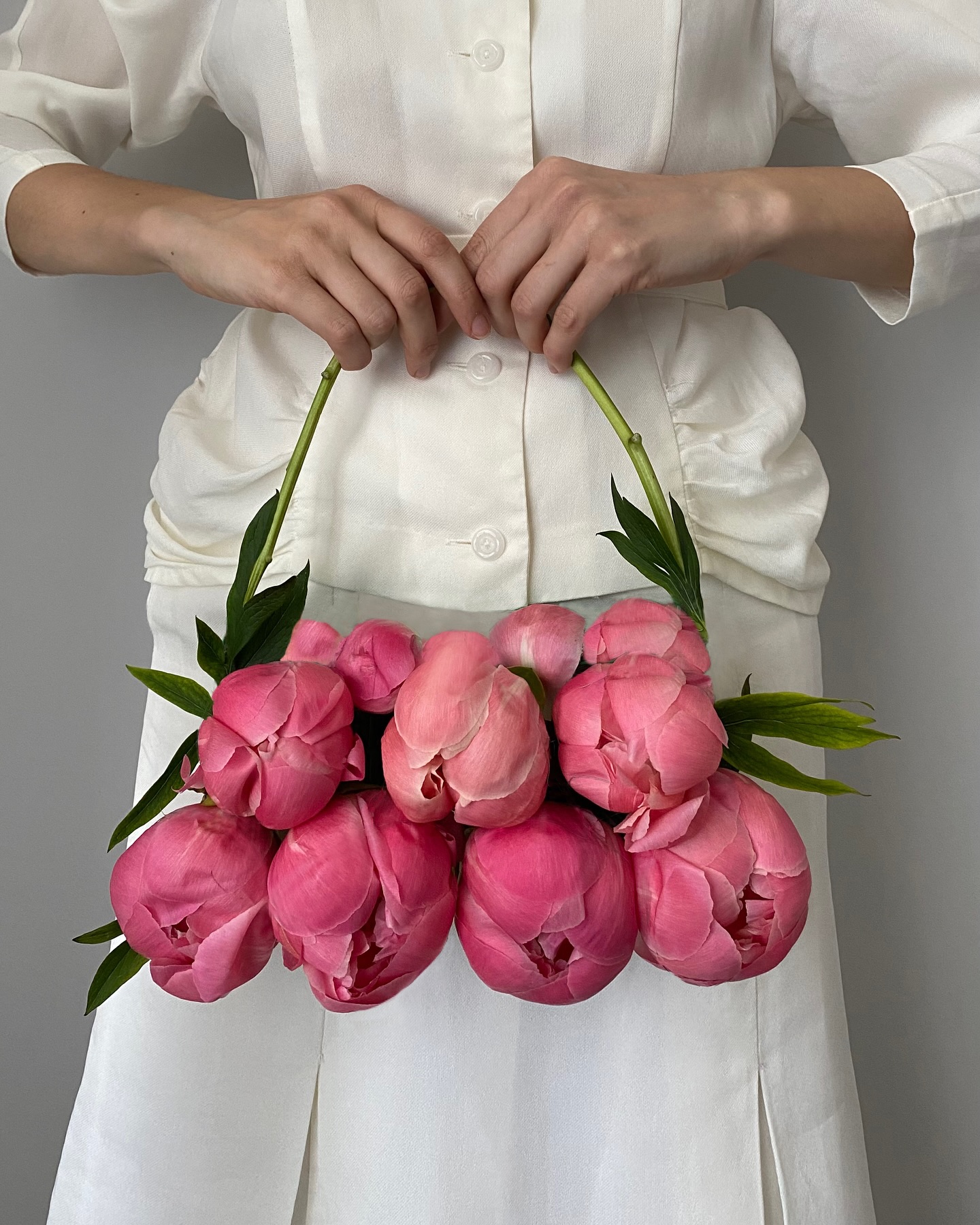
A bag crafted from Brussels sprouts and other garden materials.
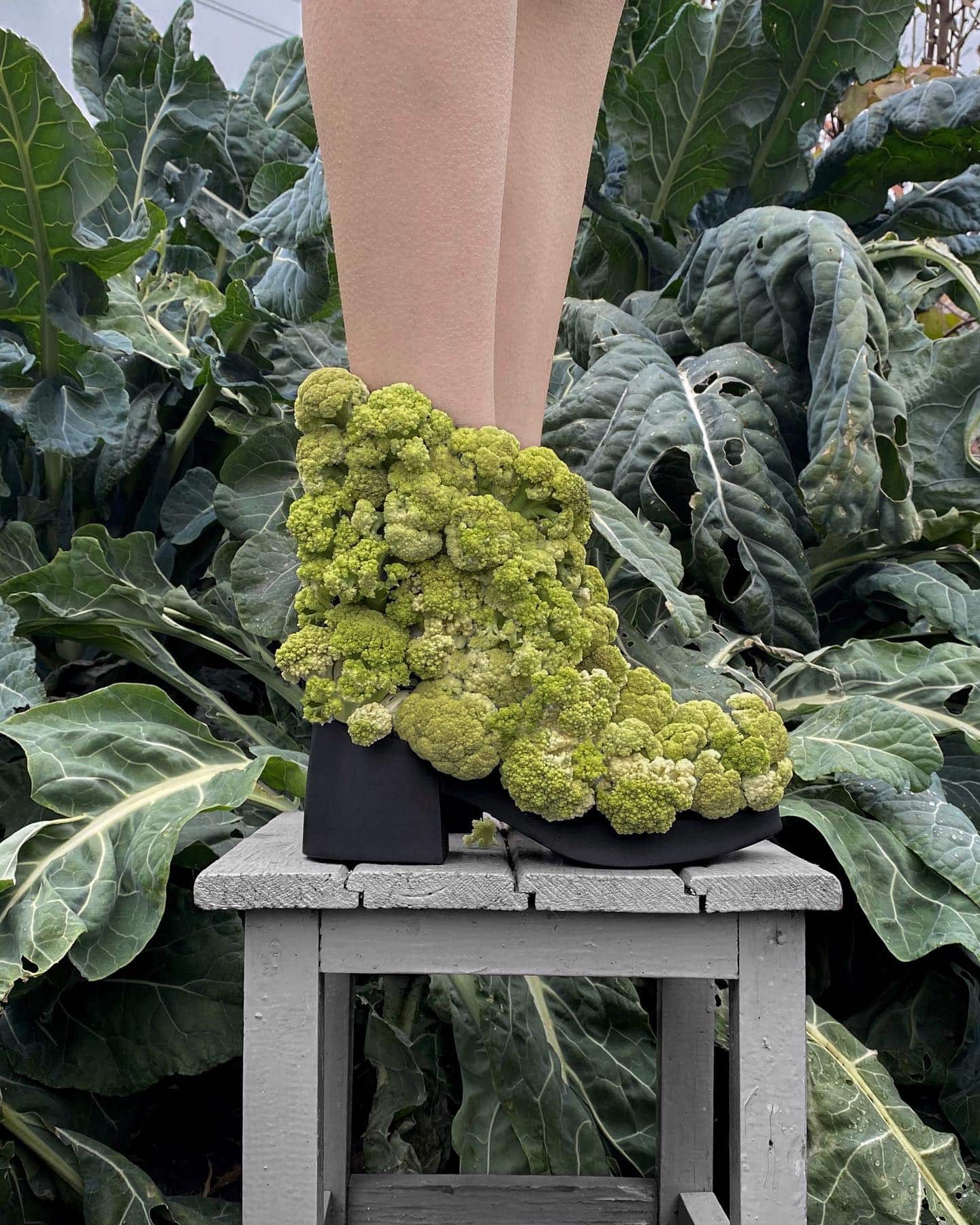
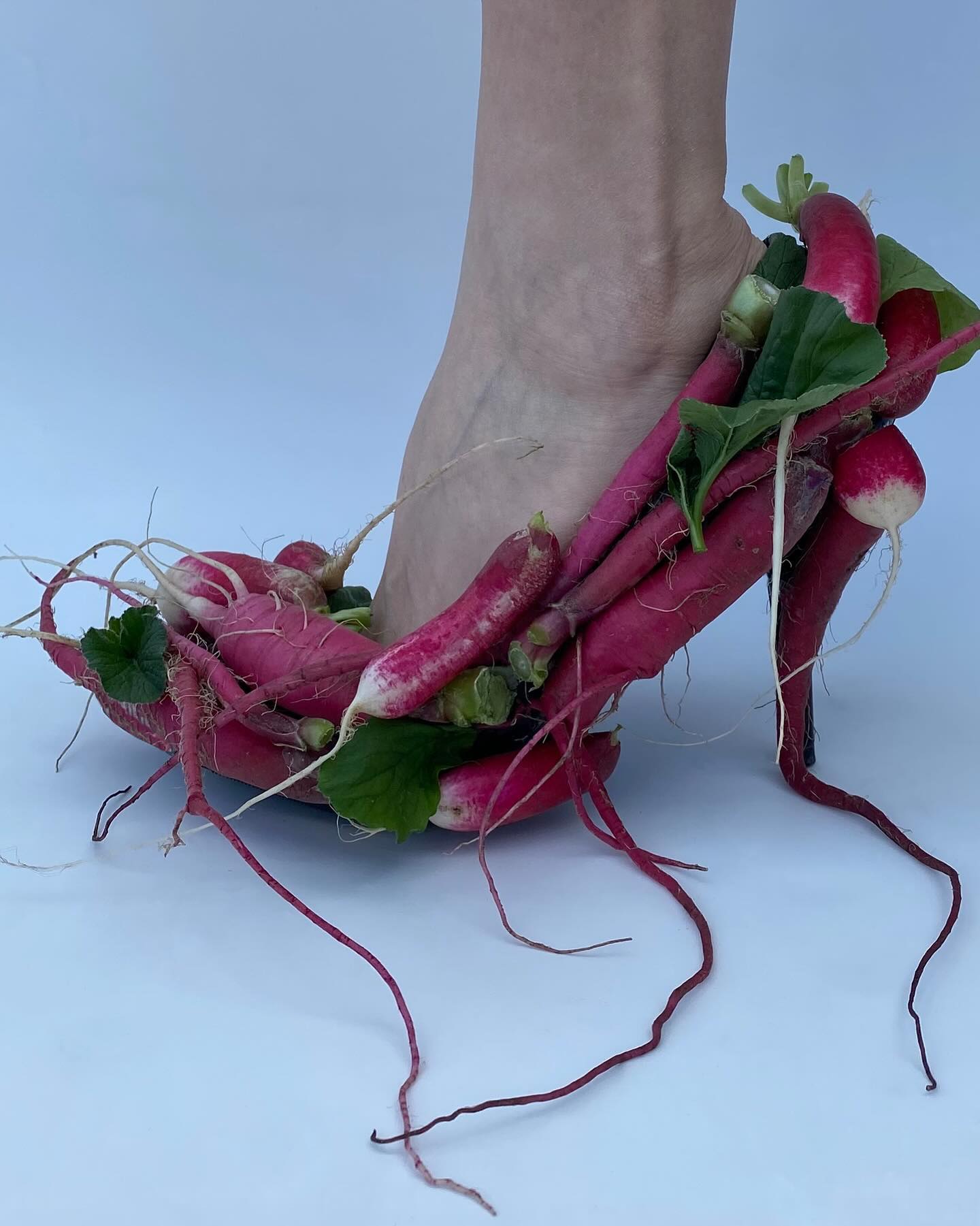
Shoes made from vegetables, roots and blooms: a radical reinterpretation of footwear.
Material resonance: The choice of organic materials forces us to reconsider what fashion can be. These aren’t mass-produced synthetics; they are fragile, seasonal, specific. That fragility becomes part of the message.
Wearability as concept: You correctly noted you’re unsure if the pieces are fully “functional”. That’s the beauty: they straddle the boundary of function and art. They ask: What if clothes reminded us of nature, time, and impermanence?
Nature + identity: In a world of fast fashion, Shukshina’s work slows things down. She invites the wearer to embody nature, not just wear it. That act becomes both playful and profound.
Narrative potential: Each piece tells a story of childhood, of garden seasons, of materials that were once alive. The work resonates with memory, place, texture.

Durability & practicality: Indeed, many of her works are ephemeral: they may wilt or degrade. But that is part of their power: they ask us to value the moment, the fresh material, the now.
Audience & impact: While the pieces are more show-piece than everyday staple, they function brilliantly in editorial, exhibition and conceptual contexts. They may not fit a daily wardrobe, but they redefine fashion’s boundaries.
Sustainability angle: Her approach is low-impact, with natural materials, reuse and composting deeply embedded in her practice. That positions her work in the conversation of eco-fashion but also in a fine-art frame.
Her work isn’t about simply dressing a body, it’s about dressing an idea, a memory, a relationship with the earth.
SHARE:
…